
Regrow. Restore. Renew.
PRP Advanced Hair Restoration, Naturally
Platelet-rich plasma hair restoration is a non-surgical treatment that uses components from your own blood to support thinning hair and stimulate follicle activity.
What is PRP hair restoration?
A natural approach to thinning hair.
PRP—platelet-rich plasma—hair restoration is a non-surgical treatment for hair loss that uses your own blood to stimulate hair growth. It is especially popular for androgenic alopecia, including male and female pattern hair loss, as well as areas of thinning hair.
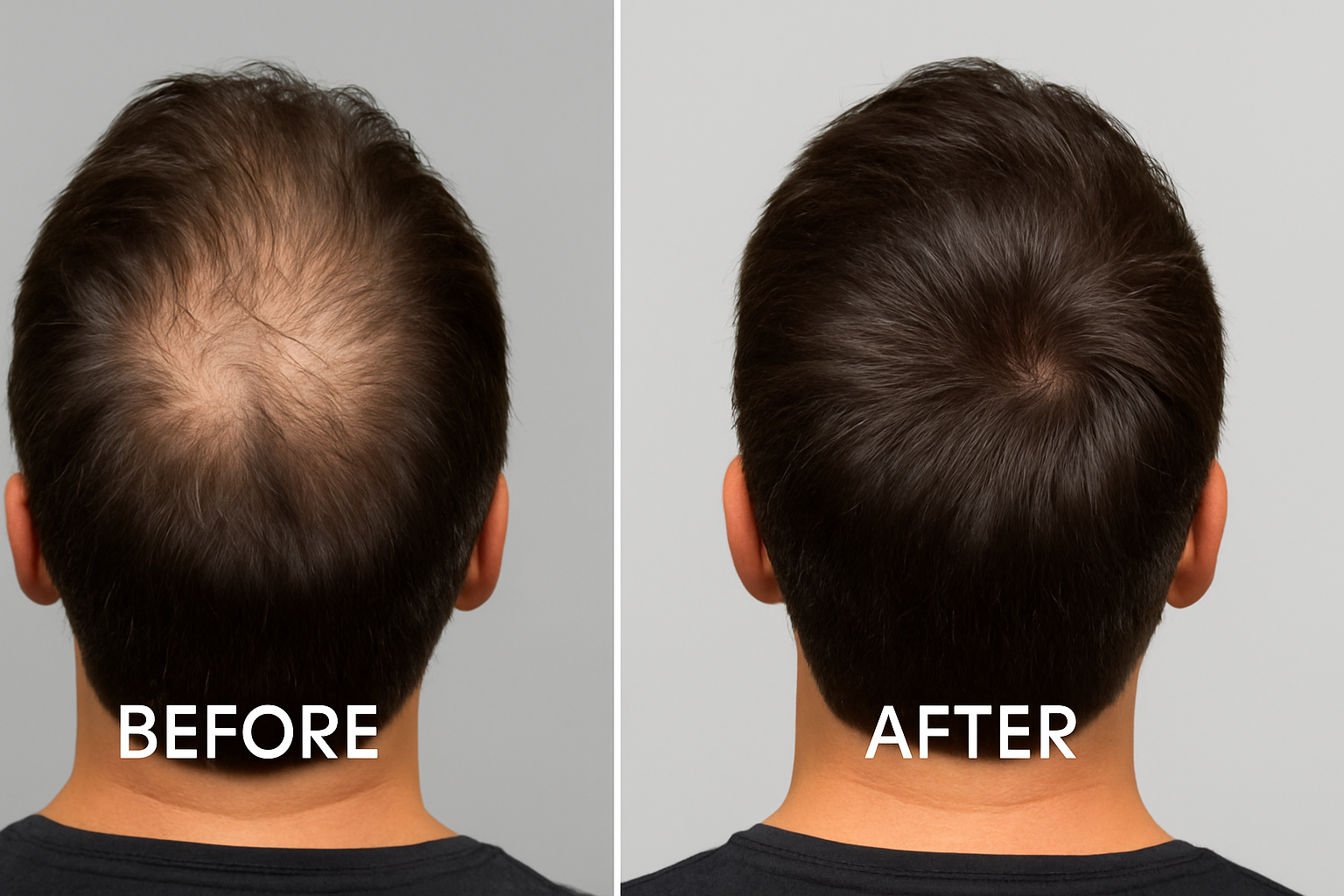
Example shown for educational purposes. Outcomes, timing, and degree of improvement vary by individual and cannot be guaranteed.
Thinning hair
Designed for patients seeking a non-surgical option to support areas where hair density has begun to decline.
Pattern hair loss
Frequently considered for androgenic alopecia, including male and female pattern hair loss.
Follicle support
Platelet-derived growth factors are used to support follicle activity, blood supply, and the hair-growth cycle.
How does it work?
Three focused steps.
Draw
A small amount of your blood is collected at the beginning of the appointment.
Separate
The blood is spun in a centrifuge to isolate and concentrate the platelet-rich plasma.
Restore
The PRP is applied to targeted scalp areas to support follicle activity, circulation, and the growth phase of hair.
Choose the plan that fits your goals.
A stand-alone appointment for patients beginning treatment or continuing an individualized plan.
Schedule nowThree sessions packaged together for a more structured treatment series.
Choose 3-packFive sessions for patients pursuing a longer, more comprehensive treatment series.
Choose 5-packPersonalized treatment
Your plan begins with a clinical review.
Hair loss can have many causes. Your appointment begins with a review of your history, pattern of hair loss, goals, and whether PRP is an appropriate option for you.
Treatment response and the number of sessions needed can vary. A consultation is the best way to discuss candidacy, expectations, and an individualized plan.